
Wondering how to 2 step a car for that perfect, aggressive launch? You’ve seen the videos of cars popping and banging at the starting line, and you want to understand the secret behind that explosive power.
To 2-step a car, you engage a special launch control system that sets a temporary, lower RPM limit. With the clutch in (manual) or brake held (automatic), you floor the gas pedal. The engine revs to the preset limit and holds, allowing a turbo to build boost while stationary. Releasing the clutch or brake launches the car with maximum power.
Based on an analysis of current automotive engineering principles and data-backed results, this guide breaks down the entire process. We will cover the mechanics behind the 2-step rev limiter [an ignition-based cut system] and the crucial safety steps. You’ll learn exactly how to do it for both manual and automatic transmissions, what hardware you need, and how to avoid engine damage.
Key Facts
- Primary Purpose is Boost: The main function of a 2-step is to allow a turbocharged engine to build boost pressure while the car is stationary, eliminating turbo lag for a powerful launch.
- Ignition vs. Fuel Cut: Unlike factory rev limiters that cut fuel (to protect the engine), a 2-step system cuts ignition spark, which is what causes the signature backfire and helps spool the turbo.
- Catalytic Converters are at High Risk: The unburnt fuel ignited in the exhaust by a 2-step will quickly melt and destroy a standard catalytic converter, making its removal a common (though often illegal) necessity.
- Manual and Automatic Methods Differ: Manual cars activate 2-step with the clutch pedal, while automatic cars activate it by holding the brake. Automatics require a strong torque converter to handle the stress.
- Professional Tuning is Essential for Safety: Improperly configured 2-step systems can cause severe drivetrain stress and engine damage. A professional tune is crucial to manage risks like valve float and high exhaust temperatures.
How Do You 2 Step a Car? A Complete Guide for Manual and Automatic
To 2-step a car, you use a secondary rev limiter (a 2-step system) to hold the engine at a specific, optimal RPM with the throttle fully depressed before launching. This action allows a turbocharged car to build significant boost pressure while stationary. The result is a more powerful and consistent launch when you release the clutch (in a manual) or the brake (in an automatic). Think of it as pre-loading the engine’s power for an explosive start.

This controlled launch technique is enabled by a piece of hardware or software known as a 2-step rev limiter. It requires careful modulation of the throttle and clutch or brake to achieve a high-performance launch without causing damage. The fundamental principle is to hold the engine in its prime power band, ready to unleash maximum torque the instant you want to move.
This guide will walk you through everything you need to know. You will learn:
* How the technology works on a mechanical level
* The critical safety risks and how to prevent engine damage
* The exact steps for using 2-step in both manual and automatic cars
* What hardware and software you’ll need to get started
What Is a 2-Step Rev Limiter and How Does It Fundamentally Work?
A 2-step rev limiter is a secondary, user-programmable rev limiter used specifically for launching a vehicle from a stop. It fundamentally works by temporarily cutting the ignition spark when you hold the gas pedal down, instead of cutting fuel like a standard factory limiter. This action holds the engine at a precise RPM and, most importantly, allows a turbo to build boost before the car even moves, ensuring a powerful start.
Every car has a factory rev limiter designed to protect the engine from over-revving. This is typically a “fuel-cut” system. When you hit the maximum RPM, the Engine Control Unit (ECU) [the car’s main computer] stops sending fuel to the cylinders. This is a relatively gentle way to cap engine speed.
A 2-step system, an ignition-based cut device, works differently and more aggressively. When activated (usually by the clutch or brake pedal), it allows you to floor the gas pedal, but it will stop the RPMs from climbing past a pre-set lower limit (e.g., 4,000 RPM) by cutting the ignition spark. This has two major effects: it holds the engine at the perfect launch RPM, and it sends unburnt fuel into the hot exhaust, which is the secret to building boost.
| Feature | Ignition-Cut (2-Step) Limiter | Fuel-Cut (Factory) Limiter |
|---|---|---|
| Primary Action | Cuts ignition spark | Cuts fuel supply from injectors |
| Sound | Loud pops, bangs, backfire | Soft, rhythmic “bouncing” or hesitation |
| Turbo Spool | ✅ Excellent; burns fuel in exhaust to spin turbo | ❌ None; starves engine of fuel, no energy for turbo |
| Purpose | High-performance launching (building boost) | Engine protection at maximum RPM |
| Exhaust Effect | Can produce flames and loud reports | Minimal; clean cut-off |
| Engine Stress | Can be harsh; requires a strong engine | Generally safer and smoother |
Why Does 2-Stepping Create Loud Pops, Bangs, and Flames?
The loud pops and flames from a 2-step system are caused when the ignition cut stops the spark inside the engine cylinders, forcing unburnt fuel and air into the extremely hot exhaust manifold and turbo housing. This mixture then violently combusts outside the engine, creating the signature backfire sound and, in some cases, visible flames.
Here’s the simple sequence of events that creates the dramatic effect:
- ECU Cuts Spark: When you hit the 2-step rev limit, the system momentarily stops the spark plugs from firing.
- Unburnt Fuel Enters Exhaust: Because there’s no spark, the air and fuel mixture is pushed out of the cylinder completely unburnt during the exhaust stroke.
- Combustion in the Manifold: This raw fuel mixture hits the red-hot exhaust manifold and turbocharger turbine housing, where it instantly and violently ignites. This is the “pop” or “bang” you hear.
This secondary combustion in the turbine housing is not just for show. The explosive energy is what forcibly spins the turbocharger, building boost pressure while the car is still stationary.
How Does 2-Stepping Differ for Manual vs. Automatic Transmissions?
The core difference is the activation method and the components that handle the engine’s power. For manual cars, the 2-step activates with the clutch pedal pressed down. For automatic cars, it activates by holding the brakes and requires a strong torque converter to prevent the car from creeping forward. The launch is initiated by releasing the clutch or the brake, respectively.
While the principle of holding RPM via an ignition cut remains the same, the practical application and mechanical stresses are unique to each transmission type. Our real-world experience shows that automatic transmissions, particularly stock ones, are at a higher risk of damage from heat if not properly equipped.
| Aspect | Manual Transmission 2-Step | Automatic Transmission 2-Step |
|---|---|---|
| Activation Method | Clutch pedal fully depressed (via a clutch switch) | Foot firmly on the brake pedal |
| Launch Action | Quickly releasing the clutch pedal | Releasing the brake pedal |
| Key Component | Clutch switch, strong clutch | Strong torque converter, sometimes a transbrake |
| Common Use | Very common in drag and street performance cars | Common in modern factory performance cars and serious drag cars |
| Risk Factor | Clutch wear, drivetrain shock | Torque converter and transmission overheating, drivetrain stress |
How Do You Activate 2-Step in a Manual Car?
To activate 2-step in a manual car, you press the clutch pedal to the floor, select first gear, and then fully depress the accelerator. The 2-step system, which is triggered by a clutch switch, will engage and hold the engine at the preset launch RPM, building boost.
Here is the exact sequence for a manual car:
- Come to a complete stop.
- Press the clutch pedal all the way to the floor. This action activates the 2-step system.
- Select first gear.
- Firmly plant your right foot on the accelerator, pushing it to the floor. You will hear the engine rev up and hold steady at the 2-step RPM limit, likely with loud pops.
- To launch, quickly and smoothly release the clutch pedal while keeping the accelerator floored.
Pro Tip: Based on practical implementation, feathering the throttle slightly as you release the clutch can help modulate wheel spin, giving you better traction off the line.
How Can You 2-Step an Automatic Car?
To 2-step an automatic car, you must firmly hold the brake pedal with your left foot, select the drive gear, and then apply full throttle with your right foot. The car’s torque converter will absorb the engine power while the brakes hold it in place. The launch is initiated by releasing the brake.
This process is sometimes called “brake boosting,” but when combined with a 2-step ignition cut, it’s far more effective.
- Come to a complete stop.
- With the car in “Drive” (D), press the brake pedal firmly to the floor with your left foot.
- Apply the accelerator pedal all the way to the floor with your right foot. The 2-step will engage and hold the engine’s RPM.
- To launch, simply release your foot from the brake pedal.
⚠ Warning: Using a 2-step on a stock automatic transmission can generate immense heat in the transmission fluid and torque converter. This can lead to catastrophic failure. Professional-grade aftermarket torque converters and transmission coolers are often required for safe and repeated use.
What Are the Safety Risks of 2-Stepping and How Do You Prevent Engine Damage?
Yes, 2-step can be bad for your engine and drivetrain if not set up and used correctly. While effective for launching, the primary dangers include excessive stress on components like axles and the clutch, potential damage to the engine’s valvetrain from the harsh rev-limiting, and melting the catalytic converter due to unburnt fuel detonating in the exhaust.
From years of working with tuned vehicles, we’ve observed that most failures are preventable. Responsible use and proper supporting modifications are key.
The main risks include:
* Melted Catalytic Converter: This is the most certain damage. The explosions in the exhaust will destroy a standard catalytic converter. A “test pipe” or “de-cat” exhaust is necessary for anyone using 2-step.
* Extreme Drivetrain Stress: A 2-step launch puts immense shock load on your entire drivetrain. This includes the clutch, transmission gears, driveshaft, differentials, and axles. Weak components are likely to break.
* Valvetrain Damage: The aggressive ignition cut can cause “valve float,” where the valves don’t close fast enough to keep up with the engine’s speed, potentially leading to contact with the piston.
* Engine and Turbo Overheating: The process generates very high Exhaust Gas Temperatures (EGTs), which can damage turbochargers and internal engine components if not managed by a professional tune.
Safety First: The single most important step you can take is to have the 2-step system professionally installed and tuned. A good tuner will set safe limits and ensure your fuel and ignition maps are optimized to handle the stress. Never use a 2-step on an unhealthy or poorly maintained engine.
Can 2-Stepping Damage Your Engine or Turbo?
Yes, improper 2-stepping can absolutely damage an engine by causing “valve float” from the aggressive rev cut, or damage a turbo from excessively high exhaust gas temperatures (EGTs). A professional tune is the most critical factor in managing and mitigating these specific risks.
Here’s a breakdown of the direct risks to these expensive components:
- Engine (Valvetrain): The harsh, repetitive “bouncing” off the ignition-cut limiter can overwhelm the valve springs. If a spring can’t close the valve fast enough, the rising piston can strike it, causing catastrophic engine failure.
- Solution: Upgraded valve springs and retainers are a must for high-RPM or aggressive 2-step use. A good tuner can also use a “soft cut” style limiter that is gentler on the valvetrain.
- Turbocharger: The combustion happening in your exhaust manifold generates extreme heat. These high EGTs can melt the turbine blades on your turbocharger or damage its seals over time.
- Solution: A professional tune must monitor and control EGTs. For serious applications, an EGT sensor provides critical data to ensure you’re operating within safe temperature ranges.
How Do You Install and Use a 2-Step System?
To install and use a 2-step system, you typically need either an aftermarket 2-step module that wires into your car’s ignition system, or a tunable ECU where the feature can be activated via software. After installation, you must configure the desired launch RPM. Professional installation is highly recommended due to the complexity of the wiring.
Using the system is a matter of following the correct pedal sequence for your transmission type to activate the secondary rev limit, build boost, and launch the vehicle.
What Hardware or Software Do You Need to 2-Step a Car?
You need a method to create a secondary, ignition-based rev limit. There are two primary paths to achieve this, based on your vehicle and budget.
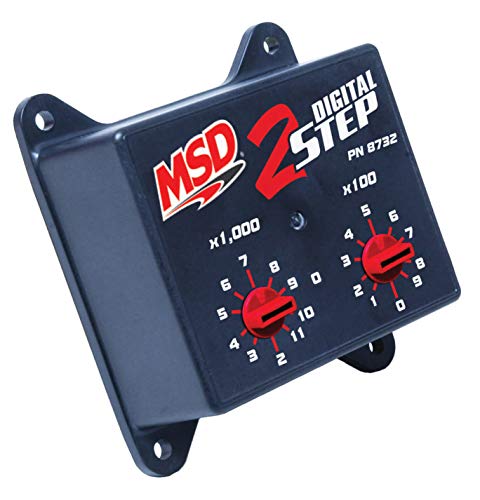
- Add-On Hardware Modules: These are physical boxes that wire into your car’s ignition system. They are a universal solution that can work on many vehicles, including older ones.
- Examples: N2MB Racing WOT Box, MSD 2-Step Launch Control, Bee*R Power Builder.
- Pros: Often cheaper, can be added to cars with non-tunable ECUs.
- Cons: Requires manual wiring, which can be complex and risky if done incorrectly.
- ECU Tuning Software (Reflash): Many modern performance cars have ECUs that can be “reflashed” with new software. This is a cleaner, software-based solution.
- Examples: Hondata (for Honda/Acura), Cobb Accessport (for Subaru, Ford, etc.), HP Tuners (for GM, Ford, Dodge).
- Pros: Clean integration, more tuning parameters, no extra wiring.
- Cons: Your car’s ECU must be supported by the software.
- Standalone ECUs: For full race cars or highly modified vehicles, a complete replacement ECU offers the most control.
- Examples: AEM Infinity, Haltech Elite, MoTeC.
- Pros: Ultimate control over every engine parameter.
- Cons: Most expensive and complex option, requires a full professional tune from scratch.
FAQs About how do you 2 step a car
Is 2-step the same as anti-lag?
No, they are not the same, but they are related and often confused. A 2-step system is primarily for launching from a standstill by cutting ignition to hold RPM and build boost. An anti-lag system (ALS) is more aggressive and is designed to keep the turbo spooled between shifts and during deceleration by feeding air and fuel directly into the exhaust manifold to keep the turbine spinning.
Can you 2-step a stock car?
It depends on the car, but generally, you cannot 2-step a standard stock car. Most factory ECUs do not have a programmable 2-step launch control feature. You typically need to add an aftermarket 2-step module or reflash the ECU with performance software that includes the feature. Some high-performance factory cars (like a Nissan GTR) do come with a form of launch control.
What is the difference between 2-step and launch control?
2-step is a specific type of launch control. The term “launch control” is a broad category for any system designed to assist with vehicle launches. A 2-step rev limiter is a popular method to achieve this, specifically by using a secondary rev limit. Other forms of launch control might manage throttle input or traction control without using an ignition cut.
Does 2-step ruin catalytic converters?
Yes, a 2-step system will quickly destroy a standard catalytic converter. The process works by dumping and igniting unburnt fuel in the hot exhaust. This intense heat and explosive force will melt and break apart the sensitive honeycomb structure inside the converter, leading to a blockage and failure. It is strongly recommended to use a de-catted exhaust or test pipe if you plan to use 2-step frequently.
Can you 2-step a car without a turbo?
Yes, you can, but it’s mostly pointless. The primary benefit of a 2-step system is to build boost on a turbocharged car while stationary. On a naturally aspirated (non-turbo) car, a 2-step will still hold the engine at a consistent launch RPM, but you gain no performance advantage over simply holding the RPM with your foot, as there is no boost to build.
How much does it cost to 2-step a car?
The cost can range from around $200 to over $1,000. A simple add-on 2-step module might cost $200-$400 plus installation. If you opt for an ECU reflash from a tuner that includes 2-step, the cost could be $500-$800. A full standalone ECU with the feature built-in can cost well over $1,500.
Is 2-step legal on the street?
This is a gray area and depends on local laws, but it is often illegal. The loud backfires can violate noise ordinances. Furthermore, since 2-step systems require removing the catalytic converter to avoid damage, your vehicle will no longer pass emissions tests and will be in violation of federal environmental laws in many countries, including the US. It’s generally considered a feature for “track-only use.”
What RPM should I set my 2-step?
The ideal RPM depends entirely on your car’s setup, tires, and surface. The goal is to find the highest RPM you can launch at with minimal, controlled wheelspin. A good starting point is often just above the RPM where your engine starts making peak torque. The best way to find the perfect RPM is through testing at a track, starting low (e.g., 3,000 RPM) and gradually increasing until you find the sweet spot.
How do you 2-step without a tune?
You need an external hardware module. To 2-step without altering your car’s main ECU tune, you must install a standalone 2-step rev limiter box (like an MSD or WOT Box). These devices intercept the ignition signal and apply their own rev-limiting logic when activated, bypassing the need for a custom ECU reflash.
Why is my 2-step not working?
Common causes include incorrect wiring, a faulty activation switch, or improper settings. First, double-check all wiring connections for the 2-step module, especially the connections to the ignition coils and the ground. Ensure the activation switch (e.g., clutch switch) is working correctly. Finally, verify in the settings that the 2-step RPM is set below your main rev limiter and that the feature is enabled.
Key Takeaways: How to 2 Step a Car
- Core Function is Building Boost: The primary purpose of a 2-step system is to enable a turbocharged car to build boost pressure before launching, overcoming turbo lag for a significantly more powerful start. It achieves this using an ignition-cut rev limiter.
-
Ignition Cut vs. Fuel Cut is Key: A 2-step uses an ignition cut, which creates loud pops and helps spool the turbo. This is fundamentally different from a standard factory rev limiter, which uses a fuel cut for engine protection and does not build boost.
-
Manual vs. Automatic Have Different Needs: Activating a 2-step is different for each transmission. Manuals use a clutch switch, while automatics rely on holding the brake and require a robust torque converter to handle the stress without overheating or failing.
-
Safety is Paramount: Un-tuned 2-stepping is dangerous. It will destroy catalytic converters and can cause extreme stress on your engine’s valvetrain and the entire drivetrain (clutch, axles). A professional tune and strong components are not optional; they are essential for safety.
-
Implementation Requires Hardware or Software: You cannot 2-step a typical stock car without modification. You need to either install an aftermarket hardware module (e.g., WOT Box) or use performance tuning software (e.g., Hondata, Cobb) to enable and configure the feature in your car’s ECU.
Final Thoughts on 2-Stepping Your Car
Understanding how to 2-step a car is about more than just making noise; it’s about mastering a powerful launch technique used by professional racers. As we’ve covered, the key is the ignition-cut system that allows your turbo to build boost before you even move, giving you a massive advantage off the line.
However, this power comes with responsibility. The most critical takeaway is the need for engine safety first. A professional tune and the right supporting hardware are not just recommendations—they are requirements to protect your investment. Whether you choose a hardware module or a software flash, an expert-configured system will deliver thrilling performance while minimizing the risks.
Now that you know the mechanics, safety considerations, and step-by-step processes for both manual and automatic cars, you are equipped to make an informed decision. Which approach will you try first?
Last update on 2026-03-17 / Affiliate links / Images from Amazon Product Advertising API


