
Wondering how big of hail is needed to damage your car? You’re not alone. After a storm, many people anxiously check their vehicles, unsure if the ice pellets were large enough to cause harm. This uncertainty can be stressful.
Hail generally needs to be at least 0.75 inches (penny-sized) to start causing noticeable, minor dents on a car’s body panels. However, factors like hailstone density, wind speed, and the car’s panel material (aluminum vs. steel) can lower this threshold, with some cosmetic damage possible even from 0.5-inch (pea-sized) hail under specific conditions.
Based on an analysis of NOAA storm data and insurance industry standards, this guide breaks down exactly what to expect. You will discover the precise damage caused by every hail size, from a pea to a softball. This reveals the key factors beyond size that determine the severity of the damage.
Key Facts
- Minimum Damage Threshold: Noticeable cosmetic damage to a car typically begins when hailstones reach 0.75 inches in diameter, which is the size of a U.S. penny.
- Official Severe Weather Alert: The National Weather Service issues a Severe Thunderstorm Warning when hail is expected to be 1 inch (quarter-sized) or larger, as this size poses a significant risk to property.
- Wind is a Major Factor: Wind-driven hail has a much higher impact energy than hail that falls vertically, meaning smaller hailstones can cause more significant damage in windy conditions.
- Total Loss Risk: Catastrophic damage, often leading to a vehicle being declared a total loss, is common with hailstones 2.75 inches (baseball-sized) or larger.
- Insurance Is Your Protection: Comprehensive auto insurance coverage is what protects against hail damage, which is typically classified as a non-collision or “Act of God” event.
What Is the Minimum Hail Size to Cause Car Damage?
The minimum hail size to cause noticeable car damage is generally considered to be 0.75 inches, or the size of a penny. At this size, hailstones have enough mass and terminal velocity to create small, shallow dings on a car’s horizontal surfaces like the roof, hood, and trunk lid. These initial dents are often considered minor hail damage and may only be visible under specific lighting conditions.
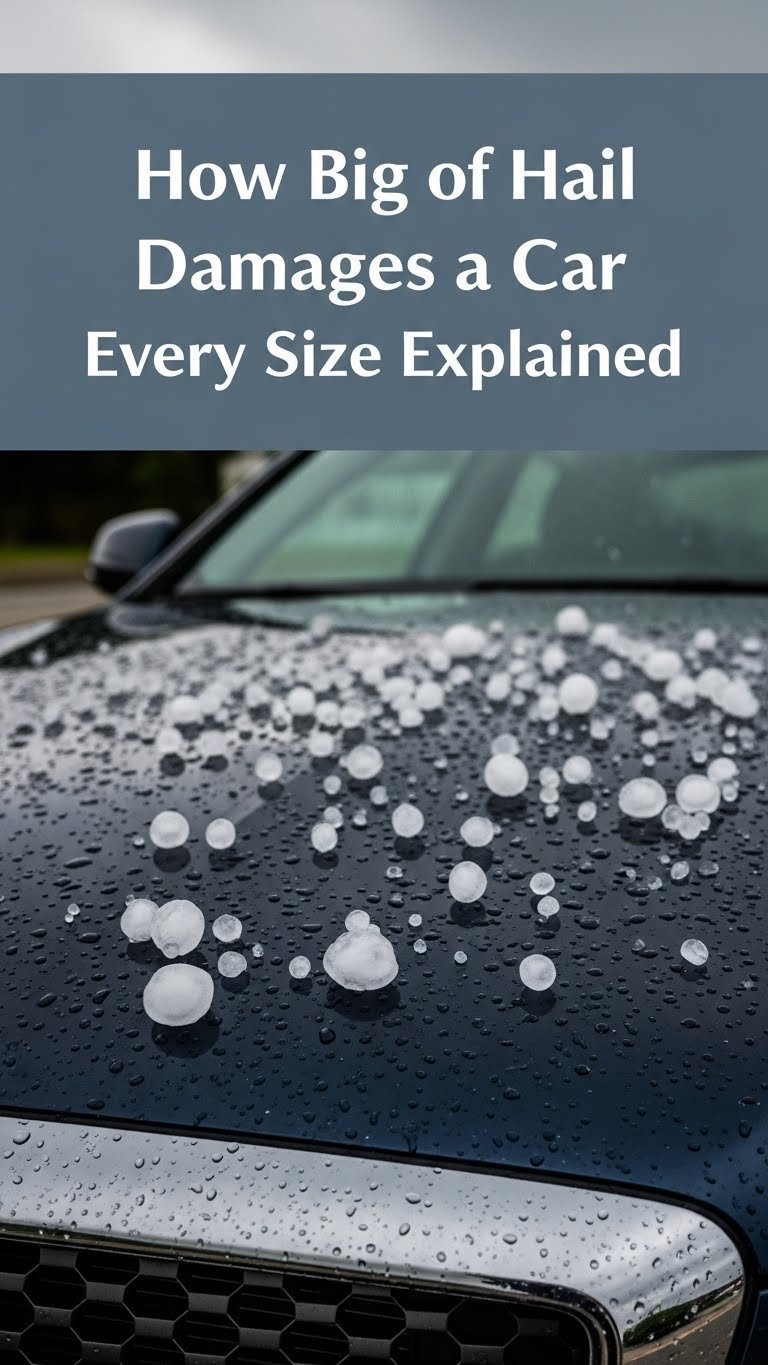
It is important to understand the difference between cosmetic damage and the official threshold for severe weather. According to NOAA storm data, the National Weather Service (NWS) defines a storm as “severe” when it produces hail of 1 inch in diameter or larger. This is because quarter-sized hail consistently produces clear and undeniable damage to vehicles and property. However, real-world experience shows that the hail damage risk to a vehicle begins with smaller hailstones.
Even pea-sized hail (around 0.5 inches) can cause very slight cosmetic flaws under certain circumstances. If accompanied by strong winds, these smaller ice stones can gain enough kinetic energy to create tiny pockmarks on a car’s finish. The type of material also plays a crucial role; lightweight aluminum body panels, often used for hoods and trunks, will dent more easily than traditional steel panels.
How Does Hail Size Correlate with Car Damage? A Detailed Chart
To understand the potential damage to your car, it helps to visualize how different hail sizes translate into real-world impacts. The relationship is not linear; as hail gets bigger, the energy it carries upon impact increases exponentially, leading to much more severe damage. This chart, synthesized from PDR specialist reports and insurance industry standards, breaks down what you can expect from each common hail size.
| Hail Size (Diameter) | Common Object Analogy | Typical Body Damage | Glass Damage Potential | Common Repair Method |
|---|---|---|---|---|
| 0.5″ – 0.75″ | Pea to Penny | Minor, shallow dings; often only visible in certain light. | Very Low | Paintless Dent Repair (PDR) |
| 1.0″ | Quarter | Noticeable, round dents. High density of impacts. | Low (possible on older/weaker glass) | PDR is highly effective |
| 1.5″ – 1.75″ | Ping Pong to Golf Ball | Deep, sharp dents. Possible paint chipping at impact center. | High (cracks, stars, bullseyes) | PDR (if paint intact) or Body Shop |
| 2.0″ – 2.5″ | Tennis Ball | Severe, large dents; can deform body lines. High risk of paint damage. | Very High (shattering likely) | Body Panel Replacement |
| 2.75″ + | Baseball / Softball | Catastrophic. Can puncture roof/hood. Widespread broken glass. | Certain (shattered windows/sunroof) | Vehicle often declared a Total Loss |
Note: Aluminum panels, common on hoods and trunks of many modern vehicles, dent more easily than steel panels. This means a car with an aluminum hood may show damage from smaller hail compared to a car with an all-steel body. Paintless Dent Repair (PDR) is a technique used by specialists to remove dents without affecting the car’s original paint finish.
What Other Factors Influence Hail Damage Severity?
While hail size is the primary indicator of potential damage, it’s not the only factor. The physics of the impact are complex, and several other variables can determine whether you end up with a few minor dings or a car destined for the body shop. Understanding these factors explains why two cars in the same storm can experience vastly different outcomes.
- Wind Speed & Direction: This is a critical multiplier for damage. A hailstone’s terminal velocity (its top speed falling downwards) is significant, but strong thunderstorm winds add horizontal velocity. This increases the total impact energy dramatically. It’s the difference between dropping a marble on your car and throwing it at your car—the impact is much harder.
- Hailstone Density & Shape: Not all hailstones are created equal. Some are smooth, spherical ice stones, while others form with jagged, irregular edges. A jagged hailstone concentrates its impact force on a smaller point, making it more likely to create a sharp dent or chip the paint. Denser, heavier hail also carries more kinetic energy, leading to more severe damage.
- Vehicle Panel Material: The type of metal your car is made from matters. Many modern cars use aluminum vs steel body panels for hoods, trunks, and sometimes roofs to save weight. Aluminum is lighter but also softer than steel, meaning it dents much more easily. An impact that leaves a minor dent on a steel panel could leave a deep, sharp one on an aluminum panel.
- Storm Duration: A short burst of large hail can cause significant damage, but a prolonged storm with smaller, quarter-sized hail can be just as destructive. The longer the storm lasts, the higher the density of impacts per panel. A roof or hood that might withstand a dozen impacts could be covered in dents after hundreds of them.
What Steps Should You Take Immediately After a Hail Storm?
Discovering your car has been damaged by hail can be overwhelming. However, by taking a few clear, methodical steps, you can streamline the insurance and repair process. Acting quickly and documenting everything thoroughly is the best way to ensure a smooth claim experience.
Step 1: How Do You Safely Inspect and Document the Damage?
Your first action should be to conduct a thorough and safe inspection of your vehicle to document all damage for your insurance claim. Do this as soon as the storm has passed and it is safe to be outside. Accurate documentation is the most important evidence you can provide to your insurance adjuster.
Pro-Tip: The best time to photograph dents is at dusk or dawn, or inside a garage with fluorescent lighting. The angled light creates shadows that make the dents much easier to see and photograph than direct sunlight.
Follow this checklist to ensure you capture everything:
* Wash Your Car: If possible, give your car a quick wash. A clean surface reveals all the damage more clearly.
* Take Wide Shots: Start by taking pictures of the entire vehicle from all four sides, plus overhead shots if possible. This establishes the overall condition.
* Photograph Each Panel: Take individual photos of each affected panel: the roof, the hood (bonnet), the trunk lid, and all side panels.
* Capture Close-Ups: Get close-up shots of individual dents. Place a coin next to a representative dent to provide a sense of scale for the adjuster. Take at least 20-30 photos in total.
* Check Everything: Don’t forget to inspect and photograph damage to plastic trim, side mirrors, window moldings, and any chrome details.
* Document Glass Damage: Take clear photos of any cracks, chips, or bullseyes on the windshield and other windows.
A common mistake to avoid is only taking pictures in bright, direct sunlight. This harsh lighting can create glare and reflections that completely hide the depth and number of dents.
How Can You Protect Your Car From Hail Damage?
The most effective way to handle hail damage is to prevent it from happening in the first place. For drivers in hail-prone regions, having a protection plan is not just a convenience—it’s a critical part of vehicle ownership. Here are the most effective methods, ranked by their reliability.
Permanent Structures
These options offer the highest level of protection but require a dedicated space.
- Garage Parking: An enclosed garage is the only 100% guaranteed way to prevent hail damage. It provides complete protection from impacts from any direction.
- Carport: A sturdy, well-built carport is the next best thing. It protects against direct vertical impacts, which cause the vast majority of damage to a car’s roof, hood, and trunk.
Temporary Covers
If you don’t have access to a permanent structure, these solutions offer excellent protection.
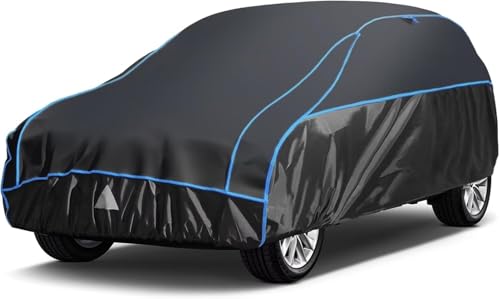
- Padded Hail Covers: These are specially designed car covers with thick layers of padding. A high-quality hail blanket can absorb the impact of small to moderate hail, preventing dents. They are a proven protection method for those who must park outdoors.
- Inflatable Car Covers: These advanced systems use a pump to inflate a protective bubble around your car, creating a cushion of air that deflects hailstones. They offer superior protection but come at a higher cost.
Last-Resort Solutions
If a hailstorm appears suddenly and you are unprepared, these measures can offer minimal, last-ditch protection.
- Find Temporary Shelter: Quickly move your car to a public parking garage, a gas station awning, or the covered area of a bank drive-thru.
- Use Building Proximity: Park your car as close as possible to a tall, sturdy building. This can help shield one side of your car from wind-driven hail.
- Improvised Blankets: In an emergency, you can use thick moving blankets, quilts, or even your car’s floor mats to cover the most critical areas like the windshield and sunroof. This offers very little protection against significant hail but is better than nothing.
When Does Hail Damage Total a Car?
The moment a car is declared a “total loss” by an insurance company can be confusing and stressful. It’s a financial decision, not a statement about the car’s driveability. Understanding the formula used by an insurance adjuster can help demystify the process and set clear expectations.
A car is declared a total loss from hail when the estimated repair cost exceeds a certain percentage (typically 70-80%) of the vehicle’s Actual Cash Value (ACV). An insurance adjuster calculates the ACV based on your car’s make, model, year, mileage, and condition before the storm. If the repair bill is higher than this state-regulated threshold, the insurer will pay you the ACV (minus your deductible) instead of fixing the car.
The Total Loss Formula:
IF (Estimated Repair Cost / Actual Cash Value) > Total Loss Threshold (e.g., 75%)
THEN the vehicle is declared a total loss.
For example, if your car’s ACV is $10,000 and the state’s threshold is 75%, it will be totaled if the repair estimate is more than $7,500.
Catastrophic hail damage from baseball-sized hail or larger almost always results in a vehicle being declared a total loss. The damage is so extensive—pierced body panels, shattered glass, and deformed structural components—that the repair cost easily exceeds the car’s value. In these cases, the insurance company pays out the ACV, takes possession of the vehicle, and typically sells it for salvage.
FAQs About how big of hail to damage car
Is hail damage worth fixing on an older car?
Yes, it is often worth fixing hail damage on an older car, especially if you have comprehensive insurance. If the repair cost is less than the car’s Actual Cash Value (ACV) minus your deductible, a repair is financially sensible. For minor damage, Paintless Dent Repair (PDR) can be an affordable way to restore the car’s appearance and prevent a significant drop in its private sale value.
Does hail damage affect a car’s resale value?
Yes, unrepaired hail damage significantly lowers a car’s resale value. Buyers will expect a large discount, often more than the actual cost of repair, due to the poor cosmetic condition. A vehicle with a history of professionally repaired hail damage (with no salvage title) will hold its value far better than one with visible dents across its body.
Can Paintless Dent Repair (PDR) fix all hail damage?
No, PDR cannot fix all hail damage, but it is effective for most minor-to-moderate cases. PDR works best when the paint is not chipped or cracked and the dents are not too deep or on a complex body line. For large dents, punctured metal, or paint damage, traditional body shop repairs involving sanding, filling, and repainting are necessary.
How big does hail have to be to break a windshield?
Hail typically needs to be at least 1.5 inches (golf ball-sized) to crack or break a windshield. The layered safety glass of a windshield is more resistant than side windows or sunroofs. However, high-velocity impacts, a pre-existing chip in the glass, or very large hailstones (2+ inches) can easily cause a windshield to shatter.
Does comprehensive insurance cover hail damage?
Yes, comprehensive coverage is the specific part of an auto insurance policy that covers hail damage. It protects against non-collision events, often called “Acts of God,” which include weather-related incidents like hailstorms, floods, and falling trees. You will be responsible for paying your comprehensive deductible when you make a claim.
Can you still drive a car with hail damage?
Yes, you can usually drive a car with cosmetic hail damage as long as it doesn’t affect safety. If the windshield is severely cracked, obstructing your view, or if headlights or taillights are broken, the car is not safe to drive. Minor body dents do not impact the vehicle’s operational safety.
What’s the difference between cosmetic and structural hail damage?
Cosmetic damage refers to dents and dings on the surface that don’t affect the car’s function, while structural damage compromises the vehicle’s integrity. Dents on the roof, hood, and doors are cosmetic. Structural damage would involve bent roof pillars or a compromised frame, which is extremely rare and only occurs with catastrophic, softball-sized hail.
How do I spot hail damage on a used car?
To spot hail damage, view the car in the shade or under fluorescent lighting, not direct sunlight. Look at the reflection on the horizontal surfaces like the roof, hood, and trunk lid. Move your head around to see how the reflection distorts over small dents. Also, check plastic trim and metal window moldings for pockmarks.
Can hail damage my car’s tires?
It is extremely unlikely for hail to damage a car’s tires. Tires are made of thick, durable rubber designed to withstand significant impacts and harsh conditions. The force of a hailstone, even a large one, is not concentrated enough to puncture or damage a tire.
How big is 2-inch hail?
A 2-inch hailstone is approximately the size of a hen’s egg or a lime. This size of hail is considered very large and will cause severe damage to vehicles, including deep dents that may not be repairable with PDR, and it has a very high probability of breaking windows and sunroofs.
Key Takeaways: How Big of Hail to Damage Car
- Damage Starts Small: Noticeable cosmetic damage can begin with hailstones as small as 0.75 inches (penny-sized), but factors like wind and aluminum panels can lower this threshold.
- Size Dictates Severity: The scale of damage increases exponentially with size. Quarter-sized hail causes repairable dents, while baseball-sized hail is often catastrophic and can total a vehicle.
- It’s Not Just About Size: A hailstone’s terminal velocity, wind speed, its shape (jagged vs. smooth), and the car’s body material (aluminum vs. steel) are critical factors that influence the final damage outcome.
- Comprehensive Insurance is Key: Your comprehensive insurance policy is what covers hail damage. Knowing your deductible is the first step in assessing a claim.
- Documentation is Crucial for Claims: After a storm, your first priority should be to safely take detailed photos of all damage from multiple angles to support your insurance claim.
- PDR is the Preferred Repair Method: For damage where the paint is intact, Paintless Dent Repair (PDR) is the industry-standard method to fix dents without affecting the factory finish.
- Prevention is the Best Policy: The only guaranteed way to avoid damage is secure, covered parking like a garage. For those without, padded hail covers are a highly effective second option.
Final Thoughts on Protecting Your Vehicle from Hail Damage
Understanding the relationship between hail size and car damage empowers you to assess risk, take preventative action, and navigate the aftermath of a storm with confidence. While a stray pea-sized stone might be harmless, the threshold for noticeable, value-damaging dents begins around the 0.75-inch mark. As hailstones grow to the size of quarters and golf balls, the damage becomes severe, transitioning from a simple cosmetic issue to a significant financial event involving insurance claims and potentially totaling your vehicle.
The most important takeaway is to be prepared. Know your insurance coverage, have a plan for where to park during a severe weather alert, and if damage does occur, document it thoroughly. By following the steps outlined here, you can protect one of your most valuable assets and handle any hail-related incident like an informed expert.
Last update on 2026-01-14 / Affiliate links / Images from Amazon Product Advertising API





![What Car Is Chevy Bringing Back in [year]? New Lineup Revealed](https://carxplorer.com/wp-content/uploads/2026/01/What-Car-Is-Chevy-Bringing-Back-in-year-New-Lineup-Revealed-1-1-60x60.jpg "What Car Is Chevy Bringing Back in [year]? New Lineup Revealed 12")