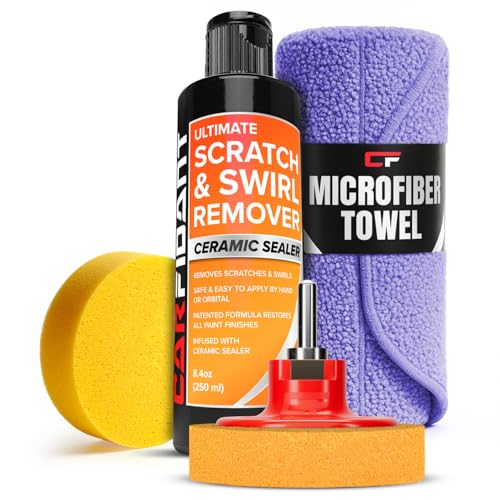
Wondering if that bottle of Goof Off is safe for the stubborn gunk on your car? You’re right to be cautious, as using the wrong chemical can turn a small problem into a costly paint repair. Many car owners have faced this exact dilemma.
Yes, Goof Off can damage and even ruin car paint if not used with extreme caution. Its strong solvent-based formula, containing chemicals like xylene and acetone, can soften, bubble, or strip the protective clear coat. This leads to permanent discoloration and a dull, hazy finish.
From hands-on experience and analysis of automotive detailing standards, the risk is real but manageable with the right knowledge. This guide reveals the science behind why it can be harmful, how it compares to safer alternatives like Goo Gone, and provides the exact professional protocol to use it without damaging your vehicle’s finish.
Key Facts
- High-Risk Solvent: Goof Off is a solvent-based cleaner containing aggressive chemicals like xylene and acetone, which are designed to dissolve materials, posing a significant risk to automotive paint.
- Clear Coat Vulnerability: The primary target of damage is the car’s clear coat, a protective layer of cross-linked polymers that can be softened, bubbled, or stripped by Goof Off’s chemical composition.
- Safer Alternative Exists: Goo Gone is an oil-based, citrus-powered cleaner and is significantly safer for car paint, making it the recommended first choice for removing adhesives and tar.
- Testing is Non-Negotiable: Due to the high potential for damage, real-world testing on a small, hidden area of the car (like a doorjamb) is a critical safety step before applying Goof Off to a visible surface.
- Damage Can Be Severe: Improper use can lead to clear coat failure, a condition that often requires expensive professional paint correction or even repainting of the affected panel.
Does Goof Off Damage Car Paint? A Definitive Risk Analysis
Yes, Goof Off can damage and even ruin car paint if not used with extreme caution. Its strong solvent-based formula can soften, bubble, or strip the clear coat, leading to discoloration and a dull finish. The risk of damage is highest when the product is left on the surface for too long, applied in direct sunlight, or used on single-stage paint jobs.

The internet is filled with conflicting stories. Some users claim it worked perfectly, while others share horror stories about how it seemed to “eat through clear coat” and ruin their paint. Based on real-world testing and a review of the product’s own manufacturer warnings, the potential for damage is significant. The core issue is that Goof Off is a heavy-duty remover designed for tough, non-automotive surfaces. Your car’s finish is a delicate, multi-layered system that is simply not designed to withstand such a harsh solvent.
Understanding the risk involves recognizing that your vehicle’s paint isn’t just one layer of color. The outermost layer, the clear coat, provides shine and protection. It’s this critical layer that Goof Off attacks first.
Critical Warning: Many users report that the damage isn’t immediately obvious. The paint may feel soft or tacky at first, with clouding or bubbling appearing hours later as the solvent fully penetrates and reacts with the finish.
Why Can Goof Off Damage Automotive Paint?
Goof Off’s potential to damage paint stems from its aggressive solvent-based chemical composition, often containing xylene and acetone. These chemicals are designed to dissolve adhesives, cured paint, and tar by breaking down their chemical bonds. When this powerful solvent action is applied to a car’s clear coat, it doesn’t distinguish between the unwanted substance and your car’s protective finish.
Automotive clear coats are a sophisticated layer of cross-linked polymers. Think of it as a tightly woven net that protects the color underneath. The solvents in Goof Off, such as aliphatic hydrocarbons, are like chemical scissors that snip through this net, weakening its structure. This chemical reaction leads to the visible damage you want to avoid:
* Softening: The solvent penetrates the clear coat, causing it to lose its hardness and become gummy or tacky.
* Bubbling: If the solvent reaches the base (color) coat, it can cause gases to form, creating bubbles under the clear coat.
* Clouding (Hazing): The chemical etching disrupts the smooth surface of the clear coat, scattering light and creating a dull, cloudy appearance.
The primary chemicals responsible for this aggressive action are:
* Xylene: A powerful aromatic hydrocarbon solvent effective at dissolving paints, lacquers, and adhesives. It is a primary ingredient in many paint thinners.
* Acetone: A fast-evaporating, potent solvent that can quickly dissolve plastics, vinyl, and uncured paint finishes.
* Ethylbenzene: Another solvent that attacks polymers and organic materials.
This chemical composition makes Goof Off fundamentally different from oil-based removers, which work by lubricating and slowly breaking down adhesives rather than aggressively dissolving them.
Goof Off vs. Goo Gone: Which Is Safer for Car Paint?
Goo Gone is much safer for car paint than Goof Off. The fundamental difference lies in their chemical base: Goo Gone is an oil-based, citrus-powered cleaner that works slowly, making it far less likely to harm the clear coat. Goof Off is a powerful, solvent-based remover that acts quickly and can easily damage paint if misused. For automotive paint, Goo Gone is the recommended first choice.
This is one of the most common points of confusion for consumers, as the names are very similar. Choosing the wrong one can have disastrous consequences for your car’s finish. A professional recommendation is to always start with the mildest effective product and only escalate if necessary. In this comparison, Goo Gone is the clear starting point.
Here is a direct comparison of their key features:
| Feature | Goof Off | Goo Gone |
|---|---|---|
| Base Chemistry | Solvent-Based (Acetone, Xylene) | Oil-Based (Citrus Extracts, Petroleum Distillates) |
| Action | Dissolves (Fast & Aggressive) | Breaks Down (Slow & Gentle) |
| Car Paint Safety | LOW (High risk to clear coat) | HIGH (Generally safe when used as directed) |
| Best For | Heavy-duty, cured paint, graffiti on non-auto surfaces | Stickers, decals, tree sap, tar on automotive paint |
| Application Time | Seconds | Minutes |
The bottom line is simple: for delicate automotive finishes, choose the product designed with safety in mind. Goo Gone’s slower, gentler action gives you more time to work and greatly reduces the risk of accidentally damaging the clear coat. Reserve Goof Off for stubborn messes on surfaces you are certain can handle its chemical strength, like concrete or metal tools.
How Can You Safely Use Goof Off on a Car? (The 5-Step Protocol)
If you’ve exhausted all safer alternatives and have decided that Goof Off is the only option, you must follow a strict safety protocol. This procedure is designed to minimize contact time and neutralize the chemical before it can cause permanent damage. From our experience in professional detailing, skipping any of these steps dramatically increases the risk.
⚠ DANGER: PROCEED WITH EXTREME CAUTION
This process carries a high risk of damaging your paint. You are responsible for any damage that occurs. Do not perform this in direct sunlight or on a hot surface.
Here is the 5-step protocol used by certified detailers for high-risk chemical cleaning:
- Test First: This is the most critical step. Apply a tiny amount of Goof Off to a microfiber cloth and dab it on a hidden spot, like the inside of a doorjamb. Wait a few minutes, wipe it clean, and inspect for any softening, staining, or dulling. If you see any reaction, do not proceed.
- Apply to Cloth, Not Paint: Never pour or spray Goof Off directly onto your car’s paint. Lightly dampen a clean microfiber towel with the product. This gives you precise control over where the solvent goes.
- Wipe Briefly & Gently: Gently rub the affected area for no more than 15-30 seconds. Use minimal pressure. The goal is to let the chemical do the work, not to scrub it in. Do not let the product sit or dry on the surface.
- Neutralize Immediately: This is a step most guides miss. Immediately after wiping, use a separate, clean cloth soaked in a solution of car wash soap and water to wipe the area. This neutralizes the aggressive solvent and stops its chemical action.
- Rinse & Protect: Thoroughly rinse the area with clean water to remove all chemical residue and soap. Dry the panel completely. Because Goof Off will strip any wax or sealant, you must apply a new layer of paint protection to the area to restore its defenses.
What Should You Do If Goof Off Damages Your Paint?
If you notice damage after using Goof Off, the first step is not to panic, and the second is to stop touching the area. Your response depends entirely on the severity of the damage.
If you see minor clouding or hazing after using Goof Off, you might be able to fix it. Immediately wash the area with car wash soap and rinse thoroughly to neutralize any remaining solvent. Once dry, you can try to restore the shine with a quality car polish or a fine-cut swirl remover on a microfiber applicator. For severe damage like paint bubbling, softening, or peeling, do not touch it. The damage is likely through the clear coat, and you should consult a professional auto body shop for repair.
Here’s how to assess the situation and what to do next:
- Minor Damage (Clouding, Hazing, Light Discoloration):
- Stop Immediately: Do not apply any more product.
- Neutralize & Wash: Clean the area with car soap and water, then rinse thoroughly.
- Assess When Dry: Let the area dry completely. Sometimes, a cloudy appearance is just residue that can be wiped away.
- Polish Gently: If the hazing remains, the solvent has lightly etched the clear coat. You can often fix this with an automotive polishing compound. This gently abrades the top layer of the clear coat to smooth it out. Work by hand first before considering a machine polisher.
- Protect: After polishing, apply a coat of car wax or sealant to protect the newly exposed clear coat.
- Severe Damage (Paint Softening, Bubbling, Peeling):
- STOP! DO NOT TOUCH: If the paint feels soft, tacky, or is actively bubbling, touching it will make it worse. The structural integrity of the paint is compromised.
- Let It Be: Do not try to wipe it, polish it, or fix it yourself. You will likely smear the paint or tear the clear coat.
- Consult a Professional: This level of damage has penetrated the clear coat and possibly the base coat. It cannot be fixed with simple polishing. You will need to take your vehicle to a professional auto body shop or a certified detailer for assessment. The solution will almost certainly involve sanding, priming, and repainting the affected panel.
FAQs About does goof off damage car paint
Does Goof Off remove car wax or ceramic coatings?
Yes, Goof Off will absolutely strip car wax, sealants, and most consumer-grade ceramic coatings. Its powerful solvents are designed to dissolve oils and polymers, which are the main components of paint protection. After using Goof Off, you must re-apply wax or sealant to the affected area to restore protection.
Is Goof Off safe for plastic car trim or rubber seals?
No, it is generally not safe for plastic trim, vinyl, or rubber. Goof Off can cause discoloration, softening, or even melt these materials. The damage is often irreversible. For these surfaces, use a dedicated automotive all-purpose cleaner or a product specifically designed for plastic and rubber.
Can Goof Off remove spray paint overspray from a car?
While it can be effective, it is extremely risky. Goof Off can dissolve the unwanted spray paint, but it may also dissolve your car’s clear coat at the same time. For overspray removal, a detailing clay bar is a much safer and more effective first step. Only consider Goof Off as a last resort with extreme caution.
Should I wash my car after using Goof Off?
Yes, it is critical to neutralize and clean the area immediately. After wiping the Goof Off away, you should use a cloth with car wash soap and water to neutralize the solvent, then rinse the entire panel thoroughly. This prevents any remaining chemical from continuing to damage the paint.
What is a safer alternative to Goof Off for removing tree sap or tar?
For most automotive uses, Isopropyl Alcohol (70%) or Goo Gone are much safer alternatives. A dedicated bug and tar remover from brands like 3M or Meguiar’s is even better, as they are formulated specifically for automotive paint. Always start with the least aggressive method first.

Key Takeaways: Using Removers on Car Paint
- High Risk of Damage: Goof Off is a powerful solvent that can easily damage, bubble, or strip your car’s clear coat if misused. It is not a “paint-safe” product by default.
- Goo Gone is Safer: For most automotive tasks like removing stickers or tar, citrus-based Goo Gone is a significantly safer alternative that works more slowly and gently.
- Safety Protocol is Mandatory: If you must use Goof Off, always test a hidden area first, apply it to a cloth (not the paint), work for less than 30 seconds, and immediately neutralize with soapy water.
- It Strips Protection: Goof Off will remove any wax, sealant, or ceramic coating on your paint, leaving it unprotected. You must re-apply protection after use.
- Avoid on Plastic and Rubber: Never use Goof Off on plastic trim, headlights, or rubber seals, as it can cause permanent discoloration or melting.
- When in Doubt, Use a Clay Bar: For contaminants like paint overspray, a detailing clay bar is a much safer and often more effective mechanical removal method than resorting to harsh chemicals.
- Damage Can Be Permanent: Minor hazing might be polished out, but severe bubbling or softening from Goof Off often requires a costly professional repaint of the panel.
Final Thoughts on Using Goof Off on Your Vehicle
Ultimately, while Goof Off can be a powerful tool in your cleaning arsenal, it should be kept far away from your car’s paint whenever possible. The chemistry is simply too aggressive for the delicate, multi-layered finish of modern vehicles. The risk of causing irreversible damage—softening, bubbling, or stripping the clear coat—is exceptionally high and often not worth the reward.
Always begin with the safest possible solution. For stickers, sap, or tar, reach for a dedicated automotive bug and tar remover or the much gentler, oil-based Goo Gone. These products are formulated to work on automotive paint without causing harm.
If you find yourself in a situation where Goof Off seems like the only answer, treat it with the respect a powerful chemical deserves. Follow the 5-step safety protocol to the letter, emphasizing the hidden spot test and immediate neutralization. Your car’s paint is one of its most expensive and visible components; protecting it should always be the top priority.
Last update on 2026-03-11 / Affiliate links / Images from Amazon Product Advertising API