
Wondering if you can legally sleep in your car in Virginia? You’re not alone, as the laws can feel confusing and vary by location. Navigating the rules for a simple roadside rest can be a challenge.
In Virginia, it is generally illegal to sleep in your car in publicly-owned spaces like state rest areas and on public roads, due to specific VDOT regulations and local ordinances. Legality on private property, such as a Walmart parking lot, depends entirely on the owner’s consent. Violations can result in fines and potential misdemeanor charges.
Based on analysis of current Virginia law and municipal codes, this guide breaks down the complex rules. You will discover the specific state regulations for rest areas, which cities have the strictest bans, and the critical steps to avoid a DUI charge even while parked. This reveals exactly how to stay safe and legal.
Key Facts
- State-Wide Rest Area Ban: According to Virginia Administrative Code 24VAC30-50-10, sleeping overnight in a vehicle at any state-operated rest area or wayside is strictly illegal, with violations carrying fines up to $250.
- Local Ordinances Override: The legality of car sleeping heavily depends on local city and county rules. For example, Virginia Beach City Code Section 23-28 explicitly prohibits sleeping in a vehicle on any public land.
- Serious DUI Risk: You can receive a DUI in Virginia for sleeping in your car while intoxicated if you are deemed to be in “actual physical control” of the vehicle, demonstrating a significant legal risk beyond just a parking ticket.
- Private Property Requires Consent: The only potentially legal places to sleep in your car are on private properties like Walmart or Cracker Barrel, but this requires explicit permission from the on-site manager, as there is no universal corporate policy.
- Potential for Criminal Charges: In some jurisdictions, like Roanoke County, sleeping in a vehicle can be prosecuted as a Class 4 misdemeanor under local code, showing the seriousness with which some localities treat the issue.
Can You Legally Sleep in Your Car in Virginia? The Short Answer
The legality of sleeping in your car in Virginia is nuanced; it is not illegal statewide, but it is prohibited in many specific locations and carries significant risks. While no single Virginia statute makes the act of sleeping in a car a crime everywhere, a web of state regulations, local ordinances, and private property rules makes it illegal in most practical scenarios. The most definitive rule comes from the Virginia Department of Transportation (VDOT), which bans overnight stays at all state-run rest areas.
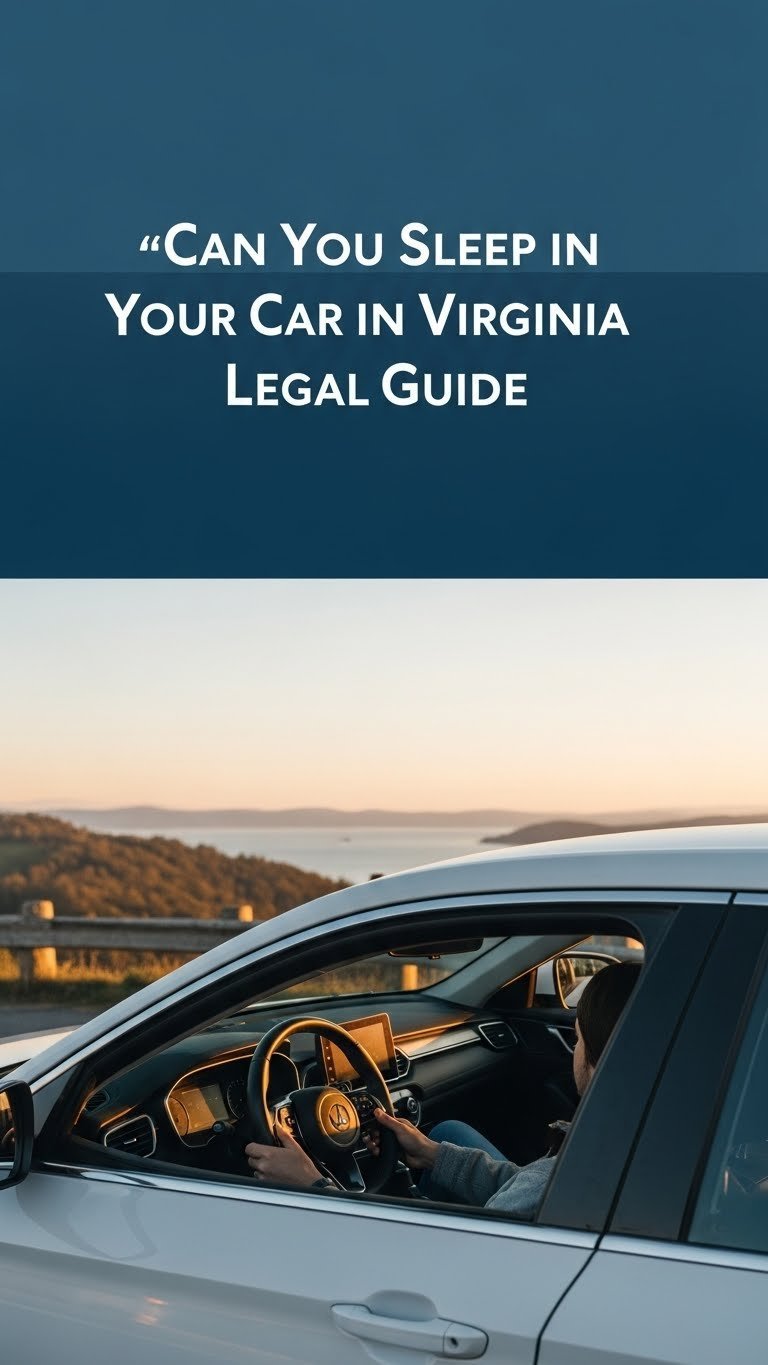
The answer depends heavily on your location. On public property, like streets and parks, the decision is up to the city or county, and many tourist-heavy or urban areas have ordinances against it. On private property, like a shopping center parking lot, legality hinges entirely on the owner’s permission. Furthermore, sleeping in your car while intoxicated poses a severe risk of a DUI charge, even if the engine is off. Understanding these different layers of law is critical to avoiding fines or charges.
What Are Virginia’s State-Wide Laws on Sleeping in Cars?
Virginia law, specifically Administrative Code 24VAC30-50-10, prohibits sleeping and overnight parking at all state-managed rest areas and waysides. This regulation is enforced by the Virginia Department of Transportation (VDOT) and applies to all facilities it operates along the state’s highways. This is the clearest and most important state-wide rule you need to know.
According to official VDOT guidelines, these areas are intended for short-term stops to combat driver fatigue, not for overnight lodging. While you can park for a brief period to rest, you cannot establish a sleeping arrangement or remain for an extended overnight period.
Official VDOT Regulation (24VAC30-50-10)
This administrative code explicitly states that activities such as sleeping, camping, and parking a vehicle for more than 24 hours are prohibited at state rest areas and waysides. Law enforcement, including Virginia State Police, actively patrol these areas. Violating this rule can result in a citation and a fine of up to $250.
This means that Virginia’s well-maintained highway rest areas are off-limits for catching a full night’s sleep. Trying to “stealth camp” here is a bad idea, as patrols are frequent and the rule is strictly enforced to ensure the facilities are available for all travelers for their intended purpose.
Where Is Sleeping in Your Car Strictly Prohibited by Local Law?
While state law governs rest stops, many of Virginia’s cities and counties have enacted their own, often stricter, laws that forbid sleeping in vehicles on public property. These ordinances are typically found in tourist destinations and densely populated urban areas. Here are some of the most notable examples as of 2026:
- Virginia Beach: This popular tourist city has a clear and strict ban. Virginia Beach City Code Section 23-28 makes it unlawful for any person to use a vehicle for living quarters or for sleeping overnight on any street, park, public parking lot, or any other public property.
- Roanoke County: This jurisdiction treats the issue as a criminal offense. Under Roanoke County Code 12-42, it is a Class 4 misdemeanor to lodge or sleep in any vehicle in a public place. This means a violation could result in a criminal record, not just a fine.
- Other Urban Areas: Cities like Richmond, Arlington, and counties like Fairfax County use a combination of strict parking enforcement and regulations against vehicular habitation to prevent car sleeping. They may have rules limiting how long a vehicle can be parked in one spot (e.g., 24 or 48 hours) or ordinances against using a vehicle for dwelling purposes.
The key takeaway is that you can never assume it’s okay to park and sleep on a public street or in a city park. You must check the specific municipal code for the city or county you are in, as local law often holds the final say.
Can You Get a DUI for Sleeping in Your Car in Virginia?
Yes, you can absolutely get a DUI for sleeping in your car in Virginia if you are intoxicated. This is a critical point that many people misunderstand. Virginia’s DUI law does not require the car to be moving; it is based on whether you are in “actual physical control” of the vehicle.
This legal concept means that if you have the present ability to operate the car, you can be charged. Law enforcement and courts will look at several factors to determine if you were in actual physical control. These include where the keys were, whether the engine was warm, and your position in the vehicle.
LEGAL WARNING: The DUI Risk
In Virginia, you don’t have to be driving to get a DUI. If you are intoxicated and in “actual physical control” of your vehicle, you can be charged. This means if you have the present ability to operate the car (e.g., keys in the ignition, in your pocket, or easily accessible), you are at risk, even if you are asleep in the back seat.
To protect yourself from this serious charge, follow these steps if you have been drinking and need to sleep in your car:
- Move to the passenger or back seat.
- Place the keys far out of reach. The best practice is to put them in the trunk, a locked glove box, or even outside the vehicle.
- Ensure the engine is off and has been for some time.
Showing a clear lack of intent to drive is your best defense. The consequences of a DUI are far more severe than a simple parking ticket.
Where Can You Potentially Sleep in a Car on Private Property?
Sleeping in your car on private property in Virginia is only legal with the explicit permission of the property owner or manager. Without consent, you are trespassing. While some national chains have a reputation for being friendly to overnight parkers, these policies are not guaranteed and are always subject to local laws and the individual store manager’s discretion.
The safest approach is to always go inside and speak directly with a manager to ask for permission before settling in for the night. Here is a comparison of common private property options:
| Location Type | Governing Body | General Rule in Virginia | How to Be Sure |
|---|---|---|---|
| State Rest Areas/Wayside | VDOT (State Law) | Illegal. Prohibited by 24VAC30-50-10. | Rule is definitive. No overnight stays. |
| Walmart/Big Box Stores | Store Manager & Local Ordinance | Varies. No corporate mandate; up to local manager. | Go inside, ask the manager directly. Look for “No Overnight Parking” signs. |
| Cracker Barrel | Store Manager | Often Permitted for RVs/travelers, but check first. | Ask manager. Park in designated RV/Bus spots away from the entrance. |
| Truck Stops (e.g., Pilot, Love’s) | Company Policy | Generally Permitted in designated car parking areas. | Check with staff. Be mindful that spots are prioritized for truckers. |
Remember, a store’s corporate policy can be overruled by a local ordinance banning overnight parking. The presence of “No Overnight Parking” signs is a clear indicator that you are not welcome. Policies change, and this information for 2026 should always be verified on-site to avoid being towed or ticketed.
FAQs About can you sleep in your car in virginia
What are the fines for sleeping in your car in Virginia?
Fines vary significantly by location, but you can face a fine of up to $250 for illegally parking overnight at a state rest area. In localities with specific ordinances, like Roanoke County, it can be charged as a Class 4 misdemeanor, which also carries a fine of up to $250. Fines for simple parking violations are typically lower.
Is car living or van life legal in Virginia?
Virginia has no state-wide law banning “van life,” but local ordinances make it very difficult in many areas. Cities like Virginia Beach and counties like Fairfax have strict rules against using a vehicle as living quarters. To live in a vehicle legally, you would typically need to be on private property with the owner’s permission and in a locality without zoning restrictions against it.
How do I avoid a ticket if a police officer approaches me?
Be polite, respectful, and honest. Explain that you were too tired to drive safely and pulled over to rest. Having your keys out of the ignition and not being in the driver’s seat can help show you had no intent to drive. If you are on private property, state that you have the owner’s permission (if you do). Never argue, as the officer has discretion.
Can you sleep in your car at Virginia state parks or national forests?
No, you cannot sleep in your car in the parking lot or along the road in Virginia’s state parks or national forests. You must be in a designated, paid campsite. Park rangers patrol these areas, and you will be told to move or be fined. Car camping is only permitted within the boundaries of your official campsite.
What’s the difference between Virginia and Maryland or West Virginia for car sleeping?
Laws vary significantly by state; Virginia is generally stricter, especially regarding rest areas. Maryland also prohibits sleeping in rest areas but some counties may be more lenient on street parking. West Virginia is often considered more permissive, with fewer specific bans, but rules can still exist. Always check the specific laws for the state you are in.
Are 24-hour gyms or hospital parking lots safe to sleep in?
This is a gray area and depends entirely on the specific location’s policy and security. While a 24-hour gym membership might imply access, it doesn’t usually include overnight lodging in the parking lot. Hospitals are private property and may tow vehicles not associated with patients or staff. Always ask for permission to avoid being towed or asked to leave.
Can you sleep in the back seat of your car in VA?
The location of your sleeping (back seat vs. front seat) does not change the legality of the act itself. If you are in a prohibited location like a rest area, it is still illegal. However, being in the back seat with keys out of reach may help you argue against a DUI charge by showing a lack of “actual physical control.”
What are the safest places to sleep in a car in VA?
The safest places are legal, designated locations like a paid campsite or a private lot where you have explicit permission. If in a pinch, well-lit, 24/7 business parking lots (with permission) are generally safer than dark, isolated roads. Avoid parking in residential areas where you might appear suspicious to residents.
Does Virginia have any “Right to Rest” acts?
No, Virginia has not passed any “Right to Rest” legislation. These acts, proposed in other states, aim to protect the rights of individuals to rest in public spaces without being cited for crimes like loitering. In Virginia, local ordinances and state laws against sleeping in cars are fully enforceable.
What should I do if I’m too tired to drive?
The safest and most legal option is to pull into a well-lit, public place like a gas station or coffee shop parking lot for a short power nap (1-2 hours). This is different from setting up to sleep overnight. Alternatively, find the nearest hotel, motel, or designated campground. The cost of a room is far less than a potential fine or DUI.
Key Takeaways: Can You Sleep in Your Car in Virginia? 2026 Summary
- State Rest Areas Are Illegal: The most critical rule to remember is that Virginia Administrative Code 24VAC30-50-10 explicitly prohibits overnight parking and sleeping at all VDOT-run rest areas and waysides, with fines up to $250.
-
Local Laws Are Stricter: Cities like Virginia Beach and counties like Roanoke have specific ordinances that make sleeping in a car a punishable offense, even a misdemeanor. Always assume urban or tourist areas have restrictions.
-
The DUI Risk is Real: You can be charged with a DUI in Virginia even while asleep if you are intoxicated and in “actual physical control” of your car. Keep your keys out of the ignition and far from reach to show you have no intent to drive.
-
Private Property Requires Permission: Your only potentially legal option is on private property, but you must have explicit consent from the store manager or property owner. Never assume a 24/7 parking lot allows overnight stays.
-
“Permission” is Your Best Defense: Whether on private property or when speaking to law enforcement, being able to state you have permission is crucial. For private lots, get it from the manager; for public roads, the only valid reason is a temporary rest to avoid drowsy driving.
-
Safety Over Stealth: Legal alternatives like designated campsites, truck stops, or a budget hotel are always safer and more secure than trying to “stealth camp” in a prohibited area, which risks fines, towing, and police encounters.
Final Thoughts on Sleeping in a Car in Virginia
Navigating the rules for sleeping in your car in Virginia is complex, but the legal landscape is clear on its key points. The state prioritizes safety on its highways, which is why VDOT regulations strictly forbid overnight stays at rest areas. At the local level, cities and counties enact their own ordinances to manage public spaces, often resulting in direct prohibitions in places like Virginia Beach and Roanoke.
The most significant takeaway is that simply being tired is not a legal defense for sleeping in a prohibited area overnight. More importantly, attempting to “sleep it off” in your car while intoxicated is a high-risk gamble that can lead to a life-altering DUI charge due to Virginia’s “actual physical control” doctrine.
Ultimately, your safest and most stress-free course of action is to plan ahead. If you’re on a long road trip, budget for a cheap motel room or map out legal campgrounds. If you find yourself unexpectedly exhausted, a short power nap in a safe, well-lit parking lot is far more defensible than an illegal overnight stay. By understanding and respecting these regulations, you can ensure your travels through Virginia are safe, legal, and free from unwanted legal trouble.


![What Car Is Chevy Bringing Back in [year]? New Lineup Revealed](https://carxplorer.com/wp-content/uploads/2026/01/What-Car-Is-Chevy-Bringing-Back-in-year-New-Lineup-Revealed-1-1-60x60.jpg "What Car Is Chevy Bringing Back in [year]? New Lineup Revealed 11")